Octave
Breaking
Commerce tariff guidance creates new quoting questions for imported tooling assemblies Automation suppliers report stronger interest in inspection and machine-tending pilots Manufacturing Connected briefing: supplier documentation pressure rises in aerospace and defense tiers Commerce tariff guidance creates new quoting questions for imported tooling assemblies Automation suppliers report stronger interest in inspection and machine-tending pilots Manufacturing Connected briefing: supplier documentation pressure rises in aerospace and defense tiers
Actionable Insights for Manufacturing Leaders
Save

Disposable Income Growth Slows to a More Normal Rate

Real disposable income was 8% below January’s level. However, it was still higher than the disposable income for any month since July 2020.

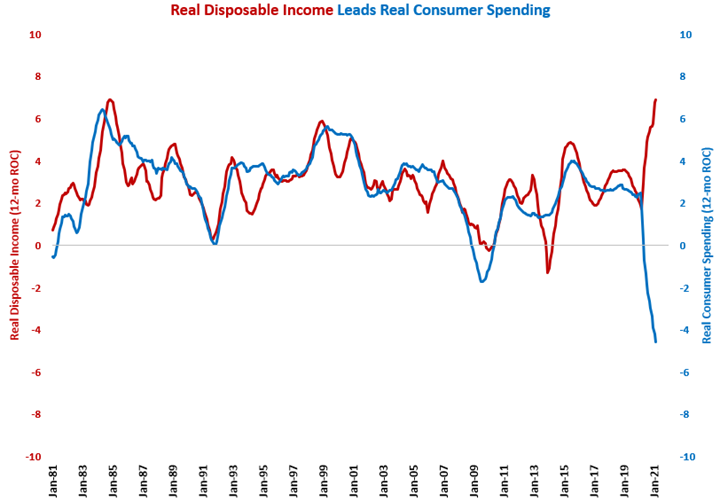
In February, real disposable income was $17,678,172 (millions of USD, SAAR). This was 8% below January’s income. Of course, the large drop in February from January was due to the stimulus payments in January. However, it was still higher than the disposable income for any month since July 2020. Compared with one year ago, disposable income increased 3.4%, which was slightly more than the historical average month-over-month growth.

The annual rate of growth in real disposable income accelerated to 6.9% in February. This was more than double the historic average growth rate and was the fastest rate of annual growth since October 1973. Unless there is more stimulus, then real disposable income is likely near its peak rate of growth.